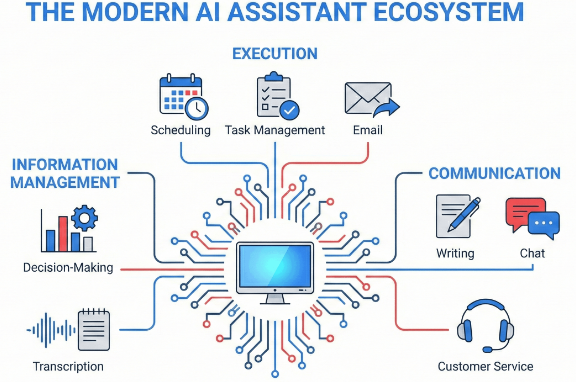
Microsoft 365 Copilot Chat is no longer just a conversational wrapper around generative AI. It is becoming a structured intelligence layer that sits across the Microsoft 365 data plane, orchestrating context from multiple document types, identities and workloads.
What makes this evolution technically interesting is not the interface. It is how context is constructed, secured and processed under the hood.
Multi-Document Contextual Grounding
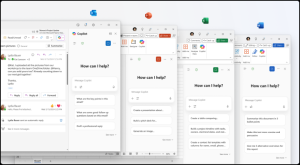
The ability to upload and analyse multiple file types in a single session changes the execution model entirely. When a user provides a Word document, an Excel workbook and a PDF simultaneously, Copilot must construct a unified semantic context from heterogeneous sources.
This requires:
- File parsing pipelines tailored per format
- Embedding generation across structured and unstructured data
- Semantic ranking within token constraints
- Strict identity validation via Entra ID
Excel introduces structured numeric data. Word contains narrative and intent. PDFs often contain mixed layout and semi-structured content. These must be normalised into a common embedding space before inference.
This is not simple concatenation. It is selective grounding. Only contextually relevant fragments are retrieved and injected into the model prompt. The output therefore reflects cross-document reasoning rather than isolated summarisation.
In enterprise terms, this removes manual consolidation cycles. Budget spreadsheets, strategy decks and research PDFs can be analysed together without human pre-processing.
Retrieval-Augmented Generation Inside the Tenant Boundary
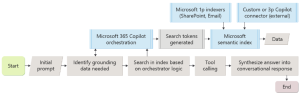
Copilot Chat follows a retrieval-augmented generation pattern. Instead of relying purely on pretrained model knowledge, it dynamically retrieves enterprise content and injects relevant segments into the inference context.
The pipeline typically includes:
- User authentication and token validation
- Permission-aware content retrieval from Microsoft 365 workloads
- Semantic chunking and ranking
- Prompt construction with grounded context
- AI inference
- Post-processing and policy filtering
Performance depends on retrieval latency and ranking precision. Too much context increases token cost. Too little reduces answer quality. The orchestration layer must balance completeness with efficiency.
This is where Copilot differentiates itself from generic chat interfaces. The intelligence layer is tightly integrated with Microsoft Graph and respects document-level permissions before inference occurs.
Security and Identity Enforcement
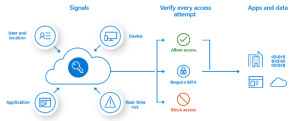
Multi-document reasoning introduces governance implications. Every retrieval action must respect the user’s effective permissions derived from Entra ID.
This means:
- SharePoint and OneDrive ACL validation
- Sensitivity label enforcement
- Conditional Access evaluation
- Session validation via Continuous Access Evaluation
Copilot does not bypass security. It operates downstream of identity validation. The AI layer receives only the data the user is already authorised to access.
If identity hygiene is weak, Copilot will surface weakly protected data. AI amplifies architecture quality — good or bad.
Voice Interaction and Conversational State
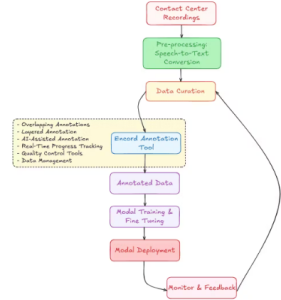
The introduction of Voice Chat shifts interaction from typed prompts to conversational sessions. Architecturally, this requires:
- Low-latency speech-to-text processing
- Session-level context retention
- Conversational turn tracking
- Real-time identity validation
Unlike text input, voice interaction often includes partial thoughts and iterative refinement. The system must preserve contextual memory across turns while maintaining permission boundaries.
If user risk changes mid-session, Conditional Access policies must still apply. The conversational layer must integrate with Continuous Access Evaluation to ensure session integrity.
Voice is not just a feature. It introduces stateful AI interaction within enterprise constraints.
Copilot as an Intelligent Orchestration Layer
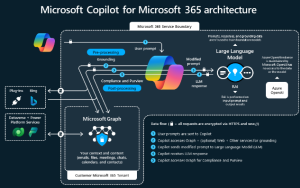
The broader shift is structural.
Historically, AI enhancements lived inside applications. Now Copilot Chat acts as an orchestration layer above them. The architecture resembles a layered stack:
- Identity layer: Entra ID authentication and token issuance
- Data layer: SharePoint, OneDrive, Exchange, Teams
- Retrieval layer: Semantic indexing and ranking
- AI inference layer: Generative reasoning
- Interaction layer: Text and voice interface
This layered approach decouples intelligence from individual apps and centralises reasoning across the tenant.
Copilot is evolving into a conversational control plane for enterprise knowledge.
Final Perspective
Microsoft 365 Copilot Chat is not simply improving productivity features. It is redefining how enterprise data is accessed, correlated and operationalised.
Multi-file reasoning, permission-aware retrieval, voice-based collaboration and session-bound identity enforcement together form a new interaction paradigm.
AI is no longer embedded inside documents. It is positioned above workflows.
And that architectural shift is what makes this evolution technically significant.